Some 55% of CIOs say they are worried about employee retention in the next 12 months, according to research from staffing firm Robert Half.
And nearly one-quarter of tech executives said losing a highly-skilled employee without notice would have a "significant adverse" impact on their business, because that person would be difficult to replace.
The report "Employee Turnover Among Tech and Creative Teams" examined responses from two separate surveys, one of 2,500 US CIOs in 25 metropolitan areas, and one of 400 US advertising and marketing executives.
"Digital initiatives require technology, design and marketing talent who can collaborate closely to meet business goals," said John Reed, senior executive director of Robert Half Technology, in a press release. "The best professionals, regardless of whether they're in the IT or creative disciplines, have technical expertise and solid communication skills, and this combination is hard to find. These workers are also difficult to retain, since many opportunities are available to them."
Among advertising and marketing executives, the top six causes of employee turnover were as follows: Limited opportunities for career growth (30%), job boredom (21%), inadequate compensation and benefits (20%), excessive workload (12%), unhappiness with management (7%), and lack of recognition (7%).
Business and tech workers can also learn from these typical reasons for employee turnover. In a September report, Robert Half also identified five warning signs that a tech employee might be preparing to leave, including increased absences or time away from the office, changes in attire, decreased communication or disengagement, changes in their personal workspace, and increased private conversations.
To retain IT employees specifically, Robert Half offers managers the following four tips:
1. If they are your best people, make sure they know it.
Acknowledge your employee's contributions, and recognize them for their individual work as well as for their value to the company. It's important to determine how each individual employee on your team prefers this recognition, such as with a private note or a public announcement.
2. Set up a plan with your best tech talent for long-term career growth and job satisfaction.
Ensure that top performers understand paths for growth in your organization, so they know they can advance and feel challenged with the company. Creating a career development plan or offering extra training in areas of interest can help.
3. Be proactive.
Make sure you are offering market salaries for your employees, and consider raises and bonuses for strong work. Ask for employee ideas on projects, in order to increase engagement.
4. Listen closely to top tech talent.
Create an environment where feedback is "welcome and expected," Robert Half advises. This way, your employees will be open about the areas of their job they are satisfied with, and with what needs improvement.
Many CIOs reported that their company was already engaging in some of these practices, the report found. Some 69% of tech executives said that they regularly check in with employees to ensure they are happy in their role, and 68% said that they regularly evaluate performance and discuss career development (interestingly, 78% of advertising and marketing executives said they do this). And half of CIOs said that they have created a formal retention strategy.
"Proactive retention strategies can go a long way toward reducing employee turnover," said Diane Domeyer, executive director of The Creative Group, in the press release. "Encouraging open, ongoing conversations with team members about their job satisfaction and professional development can help keep valued staff happy and engaged."
Canada: Change-In-Control Severance And Its Impact On Key Talent Retention
As discussed in previous posts written by my colleagues Victoria Riley and Sara Josselyn, key talent retention is an important consideration for parties to a proposed M&A transaction. The uncertainty of a potential transaction may cause key employees to seek work elsewhere, which could in turn, jeopardize the deal itself. A change-in-control (CIC) severance agreement, however, is one mechanism that can be used by companies to allay concerns and prevent key talent departures.
CIC severance offers enhanced severance to key employees upon a change-in-control. The agreement must define what would constitute a "change-in-control". Although this definition is often drafted to include a merger, hostile takeover (either through share purchases or through a proxy battle) and liquidation, when drafting, it is important to carefully consider context rather than rely solely on precedent, as the definition can, in certain circumstances, be highly fact-specific. Enhanced severance payments would be owed either upon a single trigger (meaning the occurrence of the CIC event alone) or a double trigger (meaning the occurrence of the CIC event plus a qualified termination, excluding termination for cause). A double trigger is the typical arrangement and aligns with what the Canadian Coalition for Good Governance (CCGG) advises. According to Meridian Compensation Partners a standard severance amount is 2-3x pay for a CEO and 1-2x pay for other senior executives, pay being inclusive of salary and bonus.
CIC severance also provides a cost advantage in comparison to other methods used by companies to retain key talent, namely retention bonuses. Retention bonuses offer cash bonuses to employees who stay for a given period of time after a deal is completed. As stated in this article written by Towers Watson, whereas retention bonuses are automatically awarded to all key talent who remain for the given time period as prescribed under the arrangement, CIC severance, presuming there is a double trigger, is only awarded to those key employees who are terminated after the CIC event. As a result, CIC severance may not be awarded at all.
It is recommended that a proactive approach be taken by companies when it comes to CIC severance so as not to jeopardize the deal and to avoid conflicts of interest during an M&A deal.
About Norton Rose Fulbright Canada LLP
Norton Rose Fulbright is a global law firm. We provide the world's preeminent corporations and financial institutions with a full business law service. We have 3800 lawyers and other legal staff based in more than 50 cities across Europe, the United States, Canada, Latin America, Asia, Australia, Africa, the Middle East and Central Asia.
Recognized for our industry focus, we are strong across all the key industry sectors: financial institutions; energy; infrastructure, mining and commodities; transport; technology and innovation; and life sciences and healthcare.
Wherever we are, we operate in accordance with our global business principles of quality, unity and integrity. We aim to provide the highest possible standard of legal service in each of our offices and to maintain that level of quality at every point of contact.
The content of this article is intended to provide a general guide to the subject matter. Specialist advice should be sought about your specific circumstances.
It has always been pretty obvious how important cybersecurity is for customer retention, but this new research into the matter has shed light just how important it is. “The Security Imperative: Driving Business Growth in the App Economy”, commissioned by CA Technologies, says that 89 per cent of UK organisations experienced increased customer retention, once they amped up their security practices.
There has been a 39 per cent increase in customer satisfaction, and 38 per cent increase in revenue, among companies that have employed an identity-centric approach to security. “Security has always been about protecting the business, compliance, and efficient business operations; this study is proof that security also contributes to business growth,” says Paul Briault, Sr Director, CA Technologies.
“In the application economy, customers want failsafe security and a frictionless experience. Identity-centric security applies consistent security measures across channels, allowing organisations to improve how they protect and support business operations while driving customer confidence and business growth.” Almost three quarters (74 per cent) of organisations reported an increase in customer experience, 71 per cent increase in competitive differentiation, and 87 per cent talent acquisition and retention.
Employee productivity has gone up, and so has operational efficiency. According to the report, identity-centric security can do more than 'just' protect the business – it can help build a trusted digital relationship that are essential to an organisation's success.
It was also said that security still remains a concern in the UK – with a third of organisations (33 per cent) reporting an increase in cyberattacks, in the last 12 months. A fifth, however, has reported a decrease. This decrease is the result of extra investments, and the implementation of strong authentication measures.
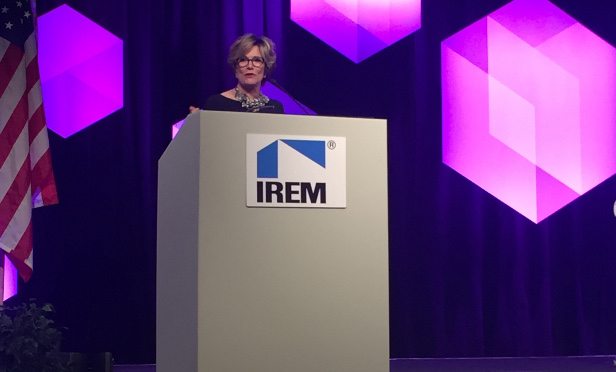
SAN DIEGO—Remaining an employer of choice for CRE talent requires focusing on flexibility, a strong, positive company culture and the human touch in all areas of the organization, panelists told moderator Jana Turner, principal of RETS Associates, during the IREM Fall Conference Industry Leaders Luncheon here Friday. Marla Maloney, president of asset services for Cushman & Wakefield, AMO; Tony Long, global director of client care for CBRE, AMO; and Rick Graf, president and CEO of Pinnacle, AMO, discussed best practices for hiring the right people, training them and retaining them for the long haul.
To remain an employer of choice, large CRE firms must look at the newest and best practices as well as legacy practices that work, Maloney said. “It’s critical for the leadership team to challenge the status quo. At our firm, we take a well-established industry and look at how to do it better.”
Graf said it comes down to company culture, and his firm has three mantras: 1. Be nice to people. 2. Do the right thing. 3. Be humble, and understand your larger role in the spectrum. Keep that in perspective.
Long said when he was at Trammell Crow Co., the firm had a mantra: 1. Respect, Integrity, Service, Excellent—or RISE. “The real trick to distinguishing your company is to hold the line on all of it.” He said he has learned the humanitarian way to encourage excellence is to apply “constant gentle pressure” on employees so they know what they do matters to you.
Turner said she loves to hear the panelists emphasize the “soft skills,” which are a big factor forMillennials. She then asked what feedback or advice they could give to smaller firms for attracting and retaining top talent.
Turner said the balance between high tech and high touch is critical in an age where technology is booming.
Graf said, whether the company is small or large, it’s the same set of issues. “You’ve got to be involved in selling the dream. Believe in what you’re selling and people will gravitate toward that.” Knowing your advantages over other companies is also key, he added.
Long gave Southwest Airlines as an example of how to hire and retain good employees. “They hire for attitude, then train for skill. They look for employees that are fun, interesting, engaging, a leader. The different sides of our company have a distinct culture. Smaller firms have a big advantage, and if you get the culture right, it can drive growth and change.”
Maloney pointed out that “you’re always looking for good people, but you meet good people through good people.” Her firm encourages employee referrals. “Know your brand; recruit full time and use the right resources.”
Graf added that it’s important to have the same message throughout the scope of the company, to “make sure everyone is singing from the same book, which can be challenging,” especially when you have employees in different offices around the world. Investing in your brand and establishing what your brand stands for is key, said Long.
Turner shifted to talking about the multi-generational workforce and asked panelists if they’ve changed their management style and/or strategy of recruitment based on having both Millennials and Baby Boomers in the workforce. Maloney said yes. “Millennials want companies with a social conscience,” so showing stock photos to them about the company doesn’t cut it. Instead, her firm offers office tours that allow candidates to see the company’s collaborative space, which offers a place to make connections and find commonalities.
Long spoke of his firm’s Workplace360 offices, which feature free address, lots of open space and the opportunity for collaboration in all areas of the company. “People see these offices, and it looks fun; it looks interesting. These concepts are sticking and changing the workplace because of Millennials, and we will continue to see collaborators taking space in offices. Office space will be much more fungible and institutionalized” than it has been.
Turner asked how we can get more collaboration between Millennials who want open space and Baby Boomers who don’t want to give up their offices. Long said long-standing ways of operating can be hard to replace; he gave the example of people going paperless: “People freak out when we say they have to get rid of their files.”
Maloney said, “It’s how you deliver the message.” She recommends getting feedback from employees on how they like to work and allowing them to go into their quiet space. You have to offer “the best of both worlds, old and new.” Graf said the interaction that takes place in kitchen spaces and other common areas is “unbelievable. We are learning and growing from Millennials,” and Maloney added that the stability that Baby Boomers seek is still there; it’s just manifested in a different way.
Turner talked about frontloading ideas, saying that how ideas are introduced is important, but it does take about a year for total integration of any new program. What employees value in a job is also changing. “Flexibility is becoming more of a priority than compensation. Millennials want flexibility, and Baby Boomers—many of whom are caring for elderly parents [and desire some leeway in established hours]—need it as well. Are you offering this?”
Graf said, “Absolutely—people work hard, and they make it up in the end.”
Maloney said, “Our role as commercial real estate executives is to care for physical assets, but we’ve built a capable team. It’s important to recognize that people have lives—daycare, parents, etc. In the end, they meet their objectives.”
Long said clocking into an office is not as important as it once was, thanks to technology, and this has naturally driven flexibility. Cell phones can follow you wherever you go. “Our people are traveling constantly, and work is happening wherever they are.” Graf said his employees are often dealing with people in different time zones, so they have to be available after hours sometimes to address problems. Maloney added that there are peaks and troughs with regard to work. “They’re working hard during peak times, so you need to balance that and give that back to them by allowing flexibility during the troughs.”
Turner asked what were the important skill sets that contribute to a successful real estate career, and Maloney said, “You have to understand how what you do creates value. A sense of urgency is important, and customers want service with a smile—we are in a service business.”
Long said being able to map out a process from end to end, and then think about the customer experience and map that out is key. “Amazon understands this—they’ve figured out the retail process and boiled it down to a few key things” that matter to customers.
Graf said, “We touch people every day in a place that’s very personal to them: their home. Many people in apartments are dealing with a lot of trauma (divorce, a lost job or lost home). You really have to have heart to help people in this very personal way.” Long added that’s it’s about the golden rule, which is fundamental, and Turner pointed out that communication skills are most important when building a team to really get things done.
Turner then asked the panelists, in an industry where there is a less-than-2% unemploymentrate, what’s keeping employees at their firm, and what are they doing to entice them to stay? Graf said having a culture of appreciation is important. “People want to be part of something transformational; make them feel appreciated and important, and talk to them.”
Maloney said most of her colleagues are on site with clients, so they don’t see their team as often as they’d like, “but we have to foster a communication system where we all feel connected.” Talking on the phone, having meaningful conversations with team members and writing handwritten thank-you notes is part of her M.O.
Long said his team stays connected via reports that talk about everything the company is doing, from sustainability to wellness (the next sustainability) to charitable giving to health and safety. “Employees see that you’re investing in them.” Turner spoke of the balance between “high tech and high touch—the personal note, the phone call, the face-to-face meeting” that are important to creating that balance.
She then asked about the characteristics, traits and competencies that have contributed to the panelists’ careers and what they would have done differently. Long said passion (something you can get excited about that will drive your career forward) and perseverance are crucial: “There’s always going to be some big challenge to test you, but by really persevering you’ll get through some really tough times.” He said he’s shied away from having tough conversations sooner, so he would have done that differently.
Maloney said doing her boss’s job for him got her firm there faster, and learning to be humble when she became a working new mother—was key for her. “Admit that you’re part of a team that has to rally together, and recognize that people have issues in their lives.” She said she learned about being a leader by being a mom, and she originally thought she wouldn’t be respected by her peers if she had kids later in life. She used to send work emails at 9:30 p.m., but then realized people thought she wanted them to respond at that hour—now she writes them at night but doesn’t send them out until the morning.
Graf said being a good listener and being inclusive were key for him. What he would have done differently is to adopt the biblical principles of Micah 6:8 (to act justly and to love mercy and to walk humbly with your God) earlier than he did.
During a Q&A with audience members, one Millennial asked why there are not more property-management degree programs at the college level. Long said the best education is a Certified Property Manager (CPM) designation, but panelists admitted they need to do more recruiting at the college level. Maloney said it has to be an industry evolution. “We’ve failed you if you haven’t heard of us in four years of college.” Graf said his firm tries to foster a relationship with Virginia Tech, “but we need to do more, for sure.” Panelists also said more should be done to help finance the process of executives earning their CPM.
Hunt Scanlon’s recently concluded co-branded talent raiding study with Marlin Hawk uncovered some revealing truths. But the most surprising result: the apparent lack of defensive people strategies at U.S. companies. A full quarter of American businesses are experiencing a marked increase in talent raids at the C-suite level, yet more than half (54 percent) are woefully unprepared to combat the problem head on.
In the following interview, Marlin Hawk’s chief innovation officer, Mark Oppenheimer, walks us through why American companies are subjected to large-scale poaching and gives some top-drawer recommendations on how to effectively deal with the problem.
Nearly 400 leading CHROs and top talent acquisition leaders took part in the report, one of the first to explore this unique and expanding dilemma in an age when not recruitment, but engagement, succession planning and retention rule supreme.
—————————————————————————-
Mark, our co-branded report on talent raiding was quite revealing. What surprised you the most?
What surprised me the most was not the prevalence of talent raids, but how unprepared the majority of companies are to counteract them. Given the amount of time, effort and financial investment put into finding and hiring key executives, I would expect employers to think carefully about building the optimum environment to retain their most valuable people. And as you know, that sentiment seems to have been top-of-mind and pervasive among our vast group of survey respondents. The fact that almost 60 percent of companies have no formal talent retention strategy in place is quite alarming, especially since many market commentators expect that demand for outstanding talent will soon outstrip supply.
What are some of the leading reasons why American companies aren’t finding ways to better defend their top talent. And is this just an ‘American’ problem?
You can never have a watertight plan to prevent talent from leaving. From time to time it’s going to happen. It’s human nature and, I think, therein lies the problem. Many companies know how to deal with the tangible issues. They identify their top talent, conduct compensation benchmark studies, ensure that the executive team is competitively compensated, tie them in with long-term incentive plans and put non-compete contracts in place. But dealing with talent is very different from financial assets or intellectual property. Companies do not tackle the soft issues that are equally important to people, especially with the Millennial generation. This is not just an American problem, I would proffer. I suspect that the same applies globally, as the U.S. is more sophisticated in its HR than many other regions of the world. Perhaps this ought to be our next survey — looking at talent raiding from a global perspective.
Talent As a Strategic Enabler
Mark, how can search firms assist companies in building up their defenses against talent raiding when recruiters themselves are oftentimes seen as the leading culprits luring top talent away?
That’s a good question! It has occurred to me that, as executive search consultants pontificating about talent retention, some might perceive us as hypocritical. It’s a fair and valid point. But we genuinely want to protect the great hires we make for our clients. That’s why we make such a big deal about preparing to onboard candidates and integrating them post placement. In our role, we talk to a broad range of candidates and gain valuable insights into why people want to stay with their current company or move on. We can’t work miracles, but we can bring our insights to the table and partner with clients in developing strategies to maximise executive talent retention.
Is talent retention going to become the primary focus of CHROs and talent acquisition professionals in the future, as opposed to recruiting?
Going forward, yes. It’s going to figure more strongly in a CHRO’s agenda. The scope of the CHRO role is vast and many have now taken on heads of talent acquisition to handle the talent management aspect of HR. It stands to reason that talent acquisition should also embrace talent retention and that, while recruiting will always be one of the key pillars of HR, there will be more of a balance in the future. We have already seen this happen, to a degree, over the past five years with an increase in employee engagement activities. Retention is really an extension of that drive to create the perfect working environment for staff at all levels.
Give us some of your top recommendations that companies can take away from our report.
The CHRO is traditionally a people’s person. In a way, it’s about going back to basics and wearing the psychiatrist’s hat, understanding the less tangible things that drive people and make them stick with the same tribe. You have to make your company a great place to work, a club that people want to be part of. Then you have to put some process around it to ensure that retention ‘best practice’ becomes part of your corporate fabric. But here’s my top two recommendations: First, keep an ear to the ground to spot executives who may be susceptible to poaching. Disaffection may be caused by someone’s role being impacted by a merger or organizational restructuring, or by their budget being cut or a project resulting in an unsuccessful conclusion through no fault of their own. Be vigilant and acknowledge such obstacles, letting the affected executive know that you are aware and care – show them a positive outcome to alleviate the situation. Second, provide a regular forum for key executives to vent frustrations. Top senior performers can still benefit from mentoring, preferably from someone at a similar level who can be objective, such as the CHRO or a non-executive director. It may be that an executive feels that promises are not being fulfilled, or that time consuming projects are derailing achievement of objectives. Early identification of a problem provides an opportunity for resolution before it becomes too late.
Mark, what’s the opportunity ahead for search firms and corporate talent acquisition professionals? Might there be a tightening partnership among them in the years ahead which could address the massive talent retention problem we’re witnessing today?
I believe that leadership advisory firms can work hand-in-hand with clients on a broader range of talent management issues. If clients are willing to let us in, we can work as an extension to the HR function, bringing an external perspective that adds real value and developing practices and processes that help lock in the people you most want to stay. As I have said, we all have to accept that while more effort can be made to hold on to key executives, talent will at some point leave and natural evolution will also create gaps. There’s an obvious opportunity to partner with search firms for succession planning, building a shadow board across each senior position, with coaching and upskilling to fast track potential replacements. In tandem, search firms can develop an external pool of talent as a contingency plan, lining up high caliber leaders with the potential to replace key executives. There may be a few unethical search firms out there who, given the chance, would poach an executive as soon as they had received payment for placing them. But most are not like that and place great importance on long-term relationships built on trust and complementary expertise.
Sourcing for ipad trade in singapore, go to PC Dreams Singapore, a Singapore website that specialised in trade in apple iphone. A guerilla marketing project for trade in apple iphone,apple trade in singapore & iphone trade in by www.scottsdigital.com.
Sourcing for recruitment agencies, go to Dougleschan.com, a Singapore company that specialised in recruitment agency in singapore. A guerilla marketing project for recruitment agency in singapore,international recruitment agencies & recruitment agency in singapore by scottsdigital.com.